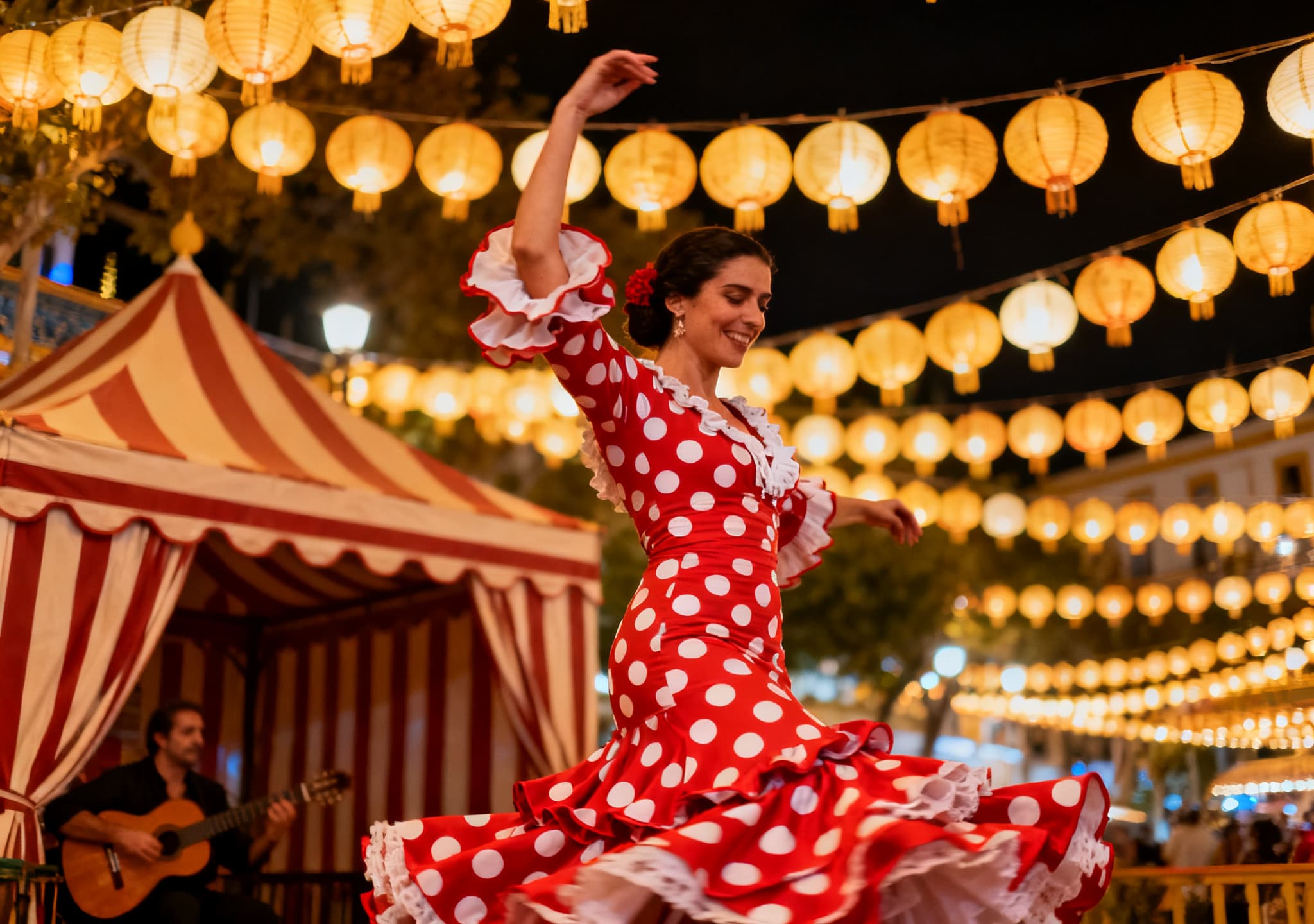
I have spent the last while playing sevillanas for a little video series, one short at a time, and the first thing I had to unlearn is the thing almost everyone believes. People hear the guitar, the raised arms, the ruffled dress, and they think: flamenco. It is not flamenco. The real story is older, and to me it is better.
It started in Don Quixote's country
Sevillanas come from the seguidilla, a folk song born up in Castile, in La Mancha. That is Don Quixote's country, the dry tableland of windmills and inns. This was not court music. It was field music, sung quick and bright in triple time at the end of a working day. Cervantes liked it enough to write seguidillas into his books, into Part Two of Don Quixote in 1615 and into La ilustre fregona before that.
From La Mancha the song went travelling. It moved south along the roads, voice to voice, nothing written down, carried by muleteers and traders and people just trying to make the long walk feel shorter. And it arrived in Seville, which at the time was the richest city in Spain, the one port that held the monopoly on trade with the Americas. Seville heard the song and made it its own.
Seville dressed it in flamenco
Here is where the confusion gets born. In the 1800s, in the era of the cafés cantantes, Seville set this Castilian folk song on fire. It picked up the guitar, the handclaps, the raised arms, that gypsy grace, the dress with all the ruffles. People call it aflamencamiento. It got dressed up in flamenco.
That borrowed grace is exactly why you think it is flamenco today. But it never stopped being its own thing. The word "sevillanas" for the dance did not even enter the Spanish dictionary until 1884, and the dance was already old by then. Seville put a flamenco costume on it. It was never a flamenco palo underneath.
The move that gives you away
A whole sevillanas is four dances, and together they tell a tiny courtship story: a little flirtation, then the back and forth, then a pretend quarrel, and finally peace. Nobody writes this down. Every Sevillian learns it as a child, in the body, by watching.
Every one of the four ends the same way, with the remate. That is the sharp freeze on the very last beat, both partners locked together, an arm thrown up. That landing is the secret. Miss it by a breath, finish late, throw the wrong arm, and everyone in the room knows you are not from there. It is the small thing that gives you away.
A week that does not want to end
If you want to see where sevillanas lives now, go to the Feria de Abril. Once a year Seville builds a whole temporary city that was not there the day before: a thousand striped tents, streets roofed in paper lanterns, horses and carriages, flamenco dresses everywhere. At midnight the great gateway lights up all at once, and for six days, afternoon to dawn, the same dance rings out of every tent. Grandmother, child, total stranger. Everyone knows the steps.
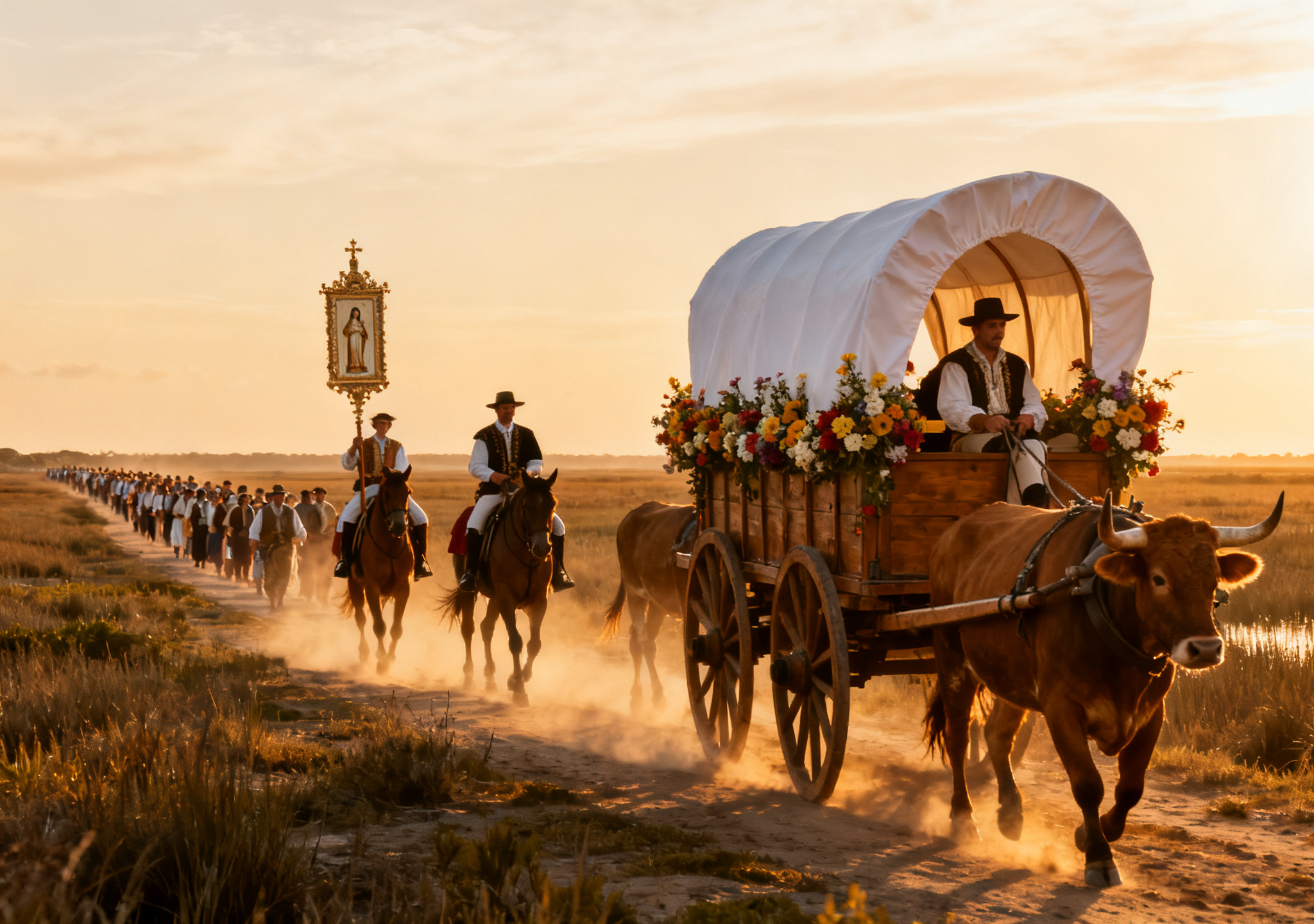
And then there is El Rocío. Every spring more than a million people set out on foot, on horseback, in ox-drawn wagons, crossing the wild marshes of Doñana toward a tiny village in Huelva. By day the singing is pure joy. At night, around the fire, it goes deeper, and the same form turns into prayer. The same dance that fills a party tent also became a way of singing to the Virgin at dawn.
It taught the whole world to dance
Here is the part that always makes me smile. Los del Río, a duo from near Seville, had been singing sevillanas since 1962. In 1993 they wrote a little rumba-pop tune. It was not a sevillana, not really, but it carried Seville's joy inside it. You have heard it. The Macarena. A remix sent it around the planet, from weddings to stadiums.
So a five-hundred-year-old folk dance, and the patch of land that raised it, ended up teaching the whole world to move. That is the thing I keep coming back to when I play these pieces. It looks like flamenco, people swear it is flamenco, and underneath it is something humbler and more stubborn: a song from the fields that refused to stop dancing.